Climate change can sound like a distant scientific phrase until it arrives as flooded streets, hotter farms, coastal erosion, failed harvests, unstable income, or families moving because the land no longer behaves the way it did. In coastal and tropical communities, the conversation is immediate. People are asking practical questions: What can we plant? How do we protect the soil? How do young people earn without destroying the environment? How can heritage become a tool for adaptation rather than a memory of what has been lost? Coconut trees are not a magical solution to every climate challenge, but they can be part of a strong and culturally grounded answer.
A coconut tree is a resilient symbol because it is useful at many levels. It can tolerate coastal conditions better than many crops, especially when appropriate varieties are selected and the land is managed properly. Its roots help hold soil. Its canopy offers shade. Its fruit supports food and enterprise. Its husk and shell can become useful materials instead of waste. Its presence in a landscape can support mixed farming systems, where families combine food crops, livestock, small processing, and tourism activities. For AFRICOCO, this is where environmental sustainability meets community empowerment. A tree is not only a tree when it becomes a source of dignity.
Coastal protection begins with understanding that the shoreline is alive. Sand, water, vegetation, wind, and human activity all interact. When natural vegetation is removed carelessly, communities can become more exposed to erosion and storm impact. Coconut trees, when planted as part of wider coastal vegetation planning, can help stabilize certain landscapes and create productive green belts. They should not replace mangroves, wetlands, or native ecological systems where those are more appropriate. Instead, they should be included wisely in a broader plan that respects biodiversity. Sustainability is not about planting anything anywhere; it is about planting the right thing in the right place for the right reason.
The economic side is just as important. Communities protect what they benefit from. If coconut planting is presented only as an environmental campaign, it may fade after the photographs are taken. But if families see that coconut can support food, income, crafts, processing, tourism, and youth enterprise, tree planting becomes an investment. A coconut seedling can become school fees, household nutrition, festival products, cooperative savings, local employment, and pride. The climate conversation becomes more persuasive when people can see how ecological care connects to everyday survival.
Internationally, coconut-producing countries have learned that resilience depends on systems. In Asia and the Pacific, coconut economies have had to address aging trees, storms, market volatility, disease, and quality standards. In the Caribbean, coconut is tied to tourism, food culture, and coastal identity. Across Africa, there is room to learn from these experiences without copying them blindly. Nigeria's coastal communities, for example, have their own land realities, market patterns, cultural histories, and youth demographics. AFRICOCO's role can be to translate global lessons into local action that feels practical and respectful.
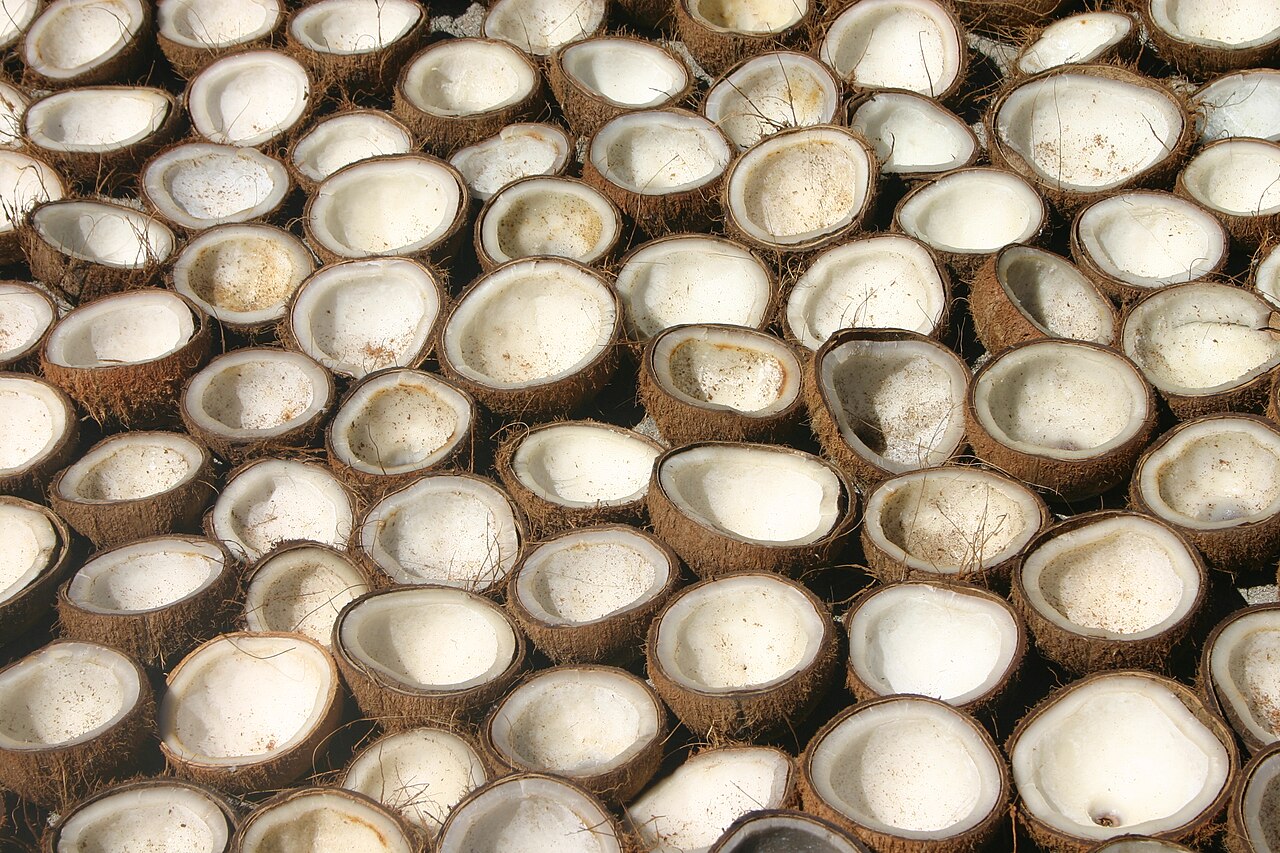
One overlooked climate opportunity is waste reduction. Coconut husk, shell, and water are often discarded when there is no processing pathway. Yet those same materials can become coir, compost, briquettes, crafts, activated carbon, animal bedding, garden products, and natural fiber innovations. Waste is often a sign that a value chain is incomplete. When communities learn to process more of the coconut, they reduce environmental burden and increase income. The entertaining truth is that coconut is almost too generous: even after you drink the water, eat the meat, press the oil, and sell the husk, the shell is still waiting to become something useful.
Education is the bridge between planting and transformation. Schools can use coconut as a living curriculum. Students can study botany through coconut growth, chemistry through oil extraction, economics through pricing, geography through trade routes, climate science through coastal ecosystems, and culture through oral history. Youth clubs can document local coconut stories with phones and publish them online. Women groups can run safe processing demonstrations. Farmers can host field days. When learning becomes visible and hands-on, sustainability stops sounding like a lecture and starts feeling like a community skill.
There are also risks to manage. Poor seedlings can disappoint farmers. Monoculture can reduce biodiversity. Weak market planning can leave producers with unsold products. Lack of water or poor soil conditions can reduce yields. Climate events can damage young trees. That is why AFRICOCO's climate work should be tied to training, monitoring, partnerships, and realistic timelines. Coconut trees take patience. They reward communities that think beyond one season and plan across generations.
The future of climate resilience in Africa will be built by people who combine local intelligence with global awareness. A farmer's experience, a scientist's research, a youth entrepreneur's creativity, a traditional leader's memory, a sponsor's resources, and a community's discipline all have roles to play. Coconut trees can stand at the center of that collaboration: rooted in heritage, useful in the present, and generous toward the future. If we plant them wisely, process them creatively, and protect the ecosystems around them, coconut can become one of Africa's most beautiful climate stories.